Posts

Showing posts with the label Kalanchoe

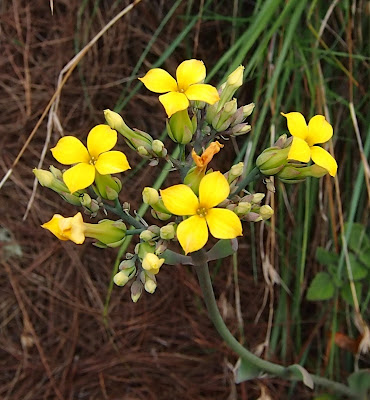
Kalanchoe spathulata, a native Philippine succulent
Image
As one might expect, the succulent flora of tropical regions are rather depauperate compared to those in more arid climates further north or south of the equator. However, families of primarily succulent plants persist even in the tropics, notably the Crassulaceae , which encompasses well-known succulent genera such as Crassula and Echeveria . In the Philippines, two genera are present- Kalanchoe and Sedum . The former was very poorly understood until quite recently, and many thought that plants found in a wild state in parts of the archipelago were escapees from cultivation, notwithstanding the fact that the plants seen farthest from human settlements all bore yellow flowers and thus lending suspicion that all were from the same species. Perhaps the most popular species in cultivation, K. blossfeldiana , has not been found in the wild despite its prevalence in gardens around towns. Three  Kalanchoe species that are not native to the Philippines which have established feral ...

Pruinescence in succulents

Image
Have you eaten grapes and noticed the whitish, powdery coating on the skins? That is called the pruina. Studies on its purpose appear to be few or lacking altogether, but because it is prevalent on plants that receive high amounts of solar exposure, the pruina then can be construed as an adaptation for the purpose of bouncing off elevated light levels and heat, thus preventing the occurrence of sunburn. Additionally, the pruina may help in the regulation of transpiration. An interesting adaptation seen in a number of plants from different families with known representatives inhabiting very dry localities is the so-called Crassulacean Acid Metabolism (CAM). Most plants transpire, or breath, day and night which allows them to release unwanted gasses and also moisture. However, in dry habitats, moisture is a valuable resource and releasing it during the heat of the day can expose the plants to risk of dehydration. And so in plants that have resorted to the CAM, transpiration is only don...