Posts

Showing posts with the label Gymnocalycium

A process of becoming.

Image
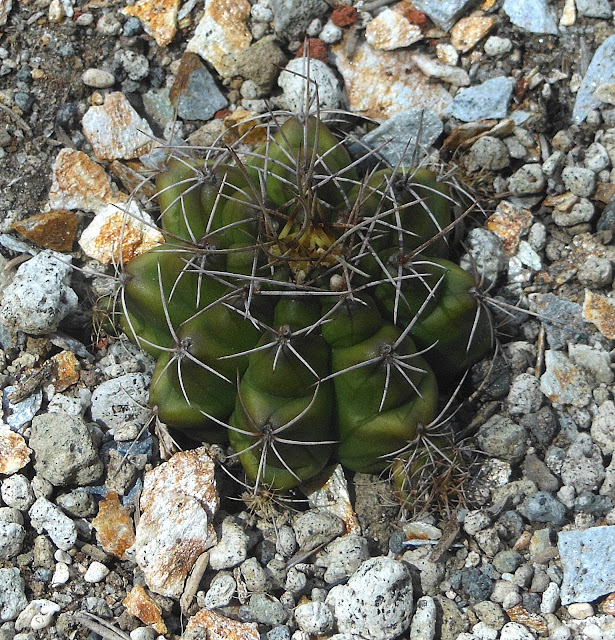
Early 2018, I purchased a plant of Gymnocalycium anisitsii subsp. damsii , a very common and inexpensive cactus that is available practically anywhere in the Philippines. It was acquired mainly for experimental purposes; these past years I have been trying to emulate the appearance of wild plants by using purely- yes, 100%- inorganic, mineral mix. No soil, just rocks. I was inspired by photos of wild plants in their natural habitats and the interest coincided with a paradigm shift wherein mainstream 'knowledge' relating to cacti mix have been totally thrown out of the window in favor of a much more natural way to grow these plants. Anybody who has spent a fair deal of time cultivating cacti surely knows what G. anisitsii subsp. damsii looks like: dark green, plump cacti with short and thin spines and  prolifically surrounded by pups. The plant I bought is typical of these store-bought varieties. Upon returning home, I immediately removed all the pups, potted it in a purely m...
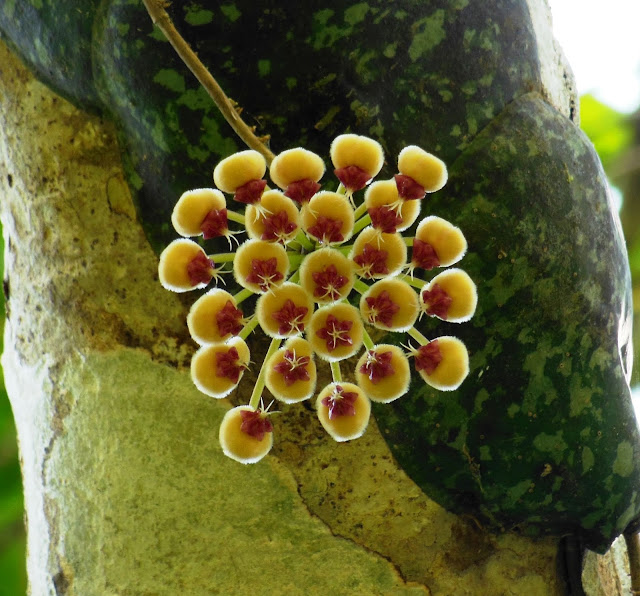
A gardener's path, P.1: Studying plants in the wild

Image
Hoya imbricata  appears to dislike company plants and grows frequently in open situations. Photographed in Ilocos Norte Upon graduation from college, my first job was that of an assistant landscaper, and for my first salary I bought a book on, what else, houseplants. I also remember buying a Jewel Orchid ( Ludisia discolor ), but most of my other purchases were not plants, but books. In these books, I was introduced, not just in matters of plant cultivation, but plant genera and species I wasn't yet aware of at that time; I recall being particularly fascinated by Amorphophallus and orchids. A year later and I moved to the province, where there are still good patches of natural habitat left, although in many cases disturbed by human activity in various levels of degradation. Nevertheless, I have been fortunate to have made friends with similar free-spirited attitudes, and not long after we were beginning to explore our environs. An overwhelming thrill permeated- now I...

A Gymnocalycium's transformation

Image
A few days after this year's New Year celebrations, I purchased a plant of Gymnocalycium anisitsi i subsp. damsii *, a very commonly available plant in the Philippines, for experimental purposes. In my mind, I wanted to change the plant's soil with one that is purely mineral, and subject it to the vagaries of weather conditions, just to test what a mineral mix can do to a plant under harsh conditions.** For many people, such a mix would be tantamount to a death sentence: nutritionally very poor, very open, and dries too quickly. A bias towards the use of a heavily organic soil as one that is suitable for cacti cultivation has been accepted as gospel truth, despite the great numbers of plants succumbing to rot or sunburn in so many collections, particularly with the novices. For this undertaking, I removed all the offsets and gently sprayed off as much of the old soil, which consists of leaf litter in advanced stages of decomposition. The plant was not air dried nor was gi...