Posts

Showing posts with the label photography

Basics of orchid photography P.2

Image
Rhyncholaelia digbyana Continuation from P. 1... Taking the best angles Many people casually take photos without any further consideration, and this is quite fine if what you are after is only a photographic record. However, always keep in mind that as a photographer, you owe it both to your subject matter and to yourself- because the quality of your shots are a reflection of your tastes- to take the best possible photos you can take. Too often, we inadvertently ignore elements that can ruin our photographs, be it a passing person in the background or an object with a coloration bright enough to wrest viewers' attention from the focal point. Of course, you can use a black cloth to block unwanted elements from creeping in, but it is not a fix-all solution. In many cases, you just have to be more attentive. Plant tags, ribbons, tie wires, and pots do not belong in your orchid photos. The laterally oriented flowers of species such as  Bulbophyllum fritilariifloru...
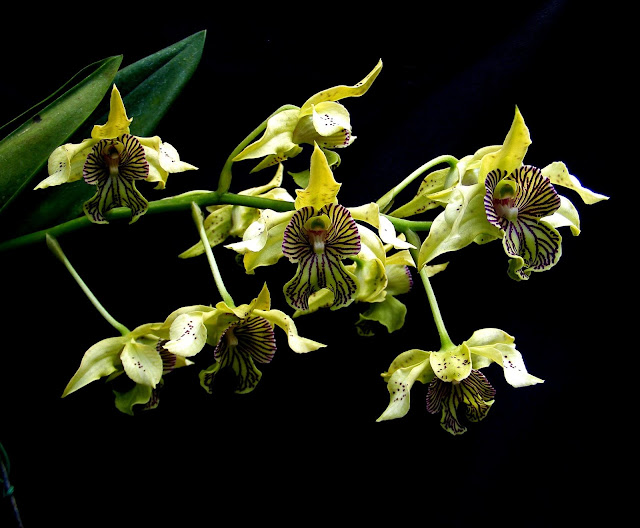
Basics of orchid photography P.1

Image
Through the years I have had the pleasure to have my photos published in numerous publications both here and abroad, both in accompaniment to my own articles or other people's, with some even landing on front covers. But I will be letting you on a secret: many people think I employ spanking, high-end gear, but the truth is that in about 98% of all orchid photos I have taken, I only used a point and shoot. And in this installment, I will be sharing with you some insights which may help you take (slightly) better orchid photos with a minimum of equipment the next time you find a flower good enough for, say, Instagram or even a publication. The basics First off: there is a difference between a picture and a photo. Anyone can take a picture, but not everyone can take a photo. Pictures are more casually taken, photographs are carefully and thoughtfully composed. If you find yourself snapping away and oblivious of what is in the background or just using the AUTO setting, then...